Concrete Admixtures
مضافات الخرسانةChemical admixtures added to the concrete mix to improve its fresh and hardened properties: workability, setting time, strength, durability and resistance to water penetration.
1 Plasticizers
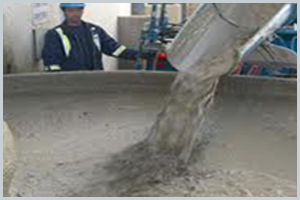
Chemical admixtures added to the concrete mix to perform two key functions:
- Reduce the mixing water, lowering the capillary porosity of the hardened cementitious matrix and improving its mechanical properties.
- Maintain the workability of fresh concrete for a reasonable period, even at a low water/cement ratio.
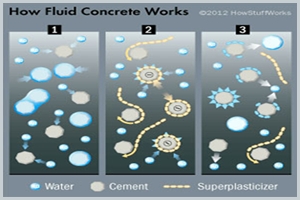
Plasticizers act on the binder (cement): they are adsorbed onto the cement particles, which then repel one another through electrostatic forces. The required workability is therefore achieved with less water, and because strength is directly linked to the water content, the mechanical properties of the concrete improve accordingly.
2 Classification according to ASTM
Chemical admixtures for concrete are classified under ASTM C494 and C1017 into the following types:
| Type | Description |
|---|---|
| A | Water Reducer |
| B | Retarder |
| C | Accelerator |
| D | Water Reducer & Retarder |
| E | Water Reducer & Accelerator |
| F | High-Range Water Reducer (Superplasticizer) |
| G | Retarding High-Range Water Reducer |
3 Recommended use
For concrete grades C18 – C25
- Type A5 – 30 °C
- Type D> 30 °C
- Type E< 5 °C
For concrete grades above C30
- Type F5 – 30 °C
- Type G> 30 °C
- Type E< 5 °C
Typical dosage: 0.75% to 1.5% by weight of cement.
Please request the product data sheet with your purchase and read it carefully before use. Our team is always happy to help.
4 Set accelerators
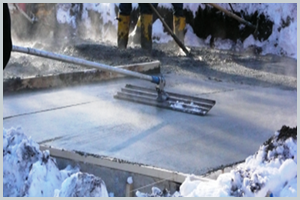
Admixtures that shorten the time for the mix to change from a plastic to a rigid state (setting time). They are typically used in cold weather.
5 Hardening accelerators
Admixtures that increase the rate of early strength development in concrete without affecting the setting time.
6 Air-entraining admixtures
Admixtures based on alcohol oils and ammonium salts that entrain small, stable and evenly spaced air bubbles in the concrete. This improves freeze–thaw resistance and workability, reduces segregation and extends service life.
7 Lightweight concrete admixtures
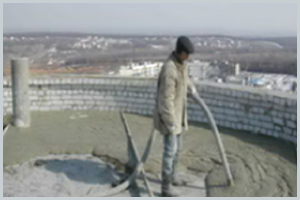
Liquid admixtures used with lightweight aggregates or perlite to produce lightweight concrete, or with foam generators to produce foamed concrete for roof insulation and screeds laid to falls towards drainage outlets.
8 Silica fume
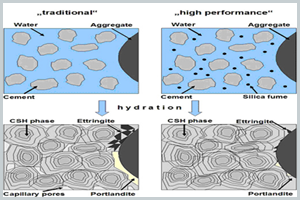
Ultra-fine particles (about 0.1 micron) with a very high surface area that react with the cement hydration products to densify the mix. The result is high-strength, high-performance concrete with lower permeability, higher abrasion and chemical resistance (including sulfate attack), reduced shrinkage and a smoother finish.
9 Waterproofing admixtures
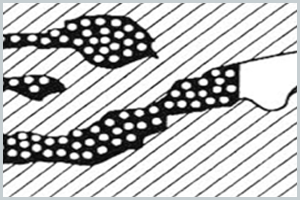
Admixtures that reduce the permeability and capillary absorption of concrete by blocking pores and capillaries, while still allowing water vapour to escape so the concrete can breathe.
10 Shrinkage-reducing admixtures
Admixtures that reduce the stresses in the pore structure caused by water loss and evaporation, significantly reducing drying shrinkage and the cracking that comes with it.
11 Corrosion inhibitors
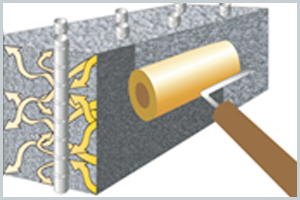
Chemicals applied as a coating to protect reinforcing steel from corrosion. Other grades are added directly to the concrete mix for the same purpose.
12 Pumping aids
Admixtures that reduce water loss and bleeding when concrete is pumped over long distances or to great heights.
13 Underwater concrete stabilizers
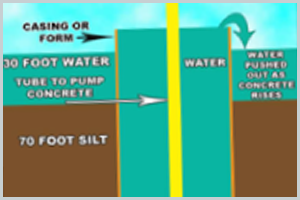
Anti-washout admixtures that increase the cohesion of concrete and prevent the cement paste from separating when it is placed under water.
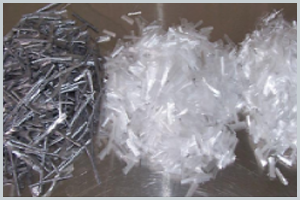
14 Fibers for crack control
Steel, glass or polypropylene fibers, each with its own properties, that disperse throughout the concrete matrix to improve cohesion, reduce shrinkage cracking and increase impact resistance and durability.
15 Expanding admixtures
Admixtures that introduce micro-bubbles into cement grout, increasing its volume and fluidity without segregation so that voids are filled completely. Typical uses:
- Rock and soil anchoring.
- Sewer and pipe ducts.
- Grouting of post-tensioning cable ducts.
- Grouting beneath structures and tunnel linings.